On November 20th, Bicycle Colorado, along with other advocates, gave public comment to Colorado’s Transportation Commission, the appointed body that oversees the Colorado Department of Transportation. We asked them to align CDOT’s near-term transportation project priorities with their stated long-term goals of improving safety for all road users, increasing mobility options, reducing tailpipe emissions, and prioritizing “fix-it-first” projects.
CDOT is in the process of updating its 10-year plan, which lays out a near-term set of priorities for how to spend billions of dollars. Part of our job as transportation advocates is to push agencies like CDOT to live up to their commitments and align their budgets with the safety and mobility needs of Coloradans. Earlier this year, Bicycle Colorado signed on to a transportation vision that urges CDOT to do better.
Under the current budget, highway and road capacity projects account for the vast majority of spending, with only 4% going to transit and 18% to multimodal projects. We believe this status quo is unacceptable; more funding should be allocated to projects that give people the freedom to travel in and around their communities without always relying on a car–whether that’s by biking, walking, or taking transit.
What gets funded (and what does not) and how projects are designed are arguably the most consequential decisions made by CDOT.
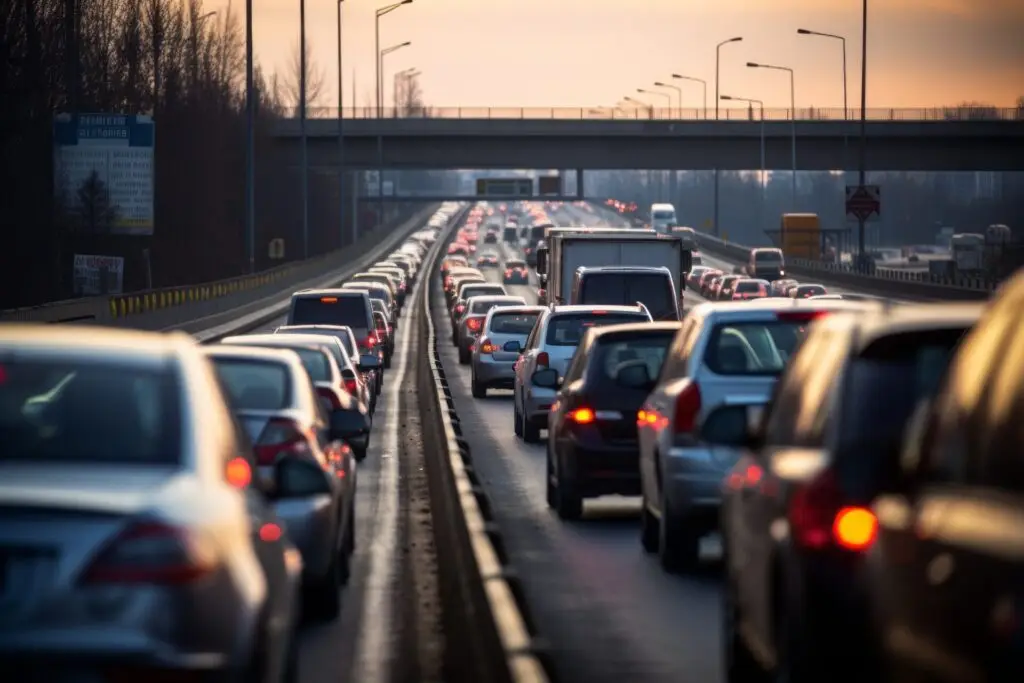
They face one such decision with I-270, a notoriously congested corridor with infrastructure that is undoubtedly in need of repair and improvement. We would like to see CDOT meaningfully explore alternatives to highway widening to address congestion and safety concerns.
Not only is the widening approach expensive, but research tells us that widening highways is an ultimately futile solution to the problem of traffic congestion. Instead, we need to be prioritizing convenient and reliable transit, thoughtfully deployed congestion pricing, and safe, connected networks for people to bike and walk.
There is a significant opportunity cost to investing our finite transportation dollars in infrastructure that neither improves safety nor ultimately solves our transportation challenges. And this cost is especially acute when, this year, in a tight budget year, $71 million for multimodal and safe streets infrastructure was cut from the state budget. Now more than ever, there is far more demand for this kind of infrastructure than there is supply of funding.
This could not be coming at a worse time, given that people are still dying by the hundreds on our roadways every year. The path to creating safer streets with fewer preventable deaths starts with how we prioritize the transportation dollars we have.
CDOT and Governor Polis have an ambitious and laudable vision for transportation in this state: A vision that gives people the freedom to move safely in their communities without always relying on a car. CDOT’s concrete plans need to align with that vision. The people of Colorado deserve it.