The 2026 Colorado legislative session brought meaningful progress for bicyclists, pedestrians, and all vulnerable road users across the state. With nine new laws passed, key threats defeated, and a growing coalition of advocates making their voices heard, this session demonstrated what’s possible when communities come together to demand safer streets. Read on for a full recap of what we fought for, what we won, and what’s ahead.
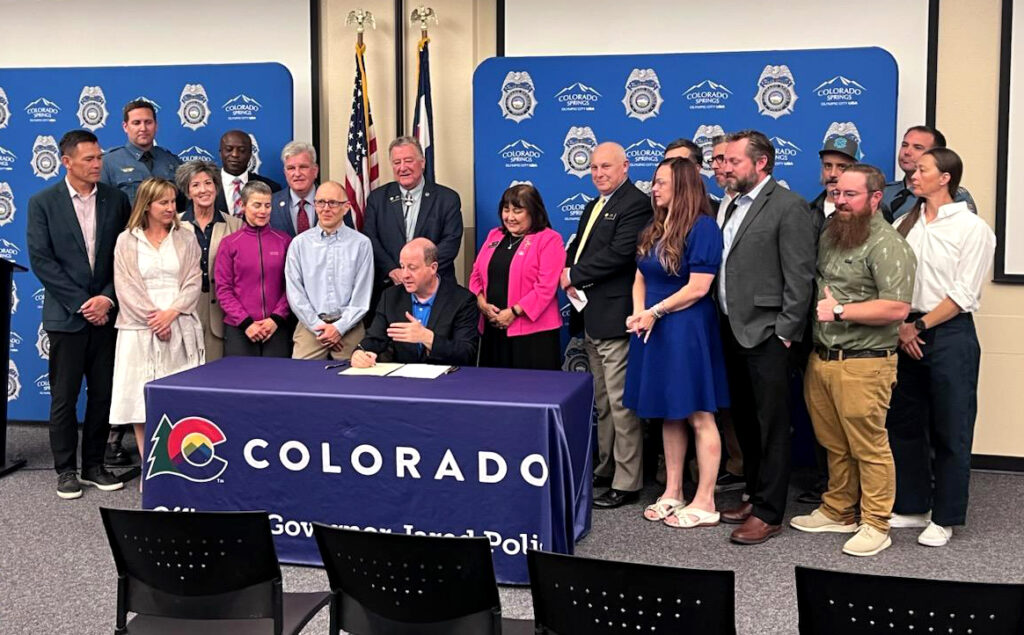
Welcome to Bicycle Colorado’s 2026 Legislative Session Recap. This report summarizes the legislation our team supported and opposed in the last legislative session, a few of the challenges we faced, and the impact Colorado’s budget crisis is having on funding for bicycle and pedestrian infrastructure. You’ll also see how your elected officials voted on the legislation we fought for.
Public policies, such as state laws, can change lives – they impact the air we breathe, the education our kids receive, access to quality healthcare, and, yes, access to safe biking and walking. For example, public policies affect whether we have shoulders on our roads, protected bike lanes, and multi-use paths; they affect the quality of driver and bicyclist education; they shape the rules of the road that influence our choices when driving and biking; and they determine whether people who disobey traffic laws are held accountable. This is why public policy has been a top priority for Bicycle Colorado since our inception in 1992.
Biking is woven into Colorado’s outdoor recreation identity and is an increasingly valued means of transportation. Biking is part of what makes Colorado a great place to live and visit. Plus, there are numerous benefits to riding bikes: it’s good for our physical and mental health, the climate, and local economies. To put this in policy language, bike policy is health policy, climate policy, and economic policy, all wrapped into one!
For Colorado to fully realize the many benefits of biking, we must remove the barriers that prevent more people from riding. This is the focus of our public policy work. Over the years, we have studied the factors that prevent people from riding. Hands down, the top reason more people don’t ride is fear of being hit by a vehicle. In fact, 60% of people surveyed say they would ride a bike (or encourage their kids to ride) if safety were less of a concern. And this concern is justified – since 2015, bicyclist and pedestrian deaths have increased by more than 90 percent. Over these ten years, 1,202 people biking and walking have lost their lives on Colorado roads.
Traffic violence is a public health epidemic. However, it is an epidemic that is, without question, solvable. Our goal is to reduce traffic fatalities to zero.
In 2026, Bicycle Colorado and other advocates helped pass 9 laws that will make Colorado’s roads safer, including measures to make bike lanes and school zones safer and to hold dangerous drivers accountable. Equally important were the bills that did not become law, such as a bill that would have reduced state funding for bicyclist and pedestrian infrastructure, and a bill that would have created a pathway for bars to remain open until 4 a.m. or later, potentially placing more impaired drivers on our roads.
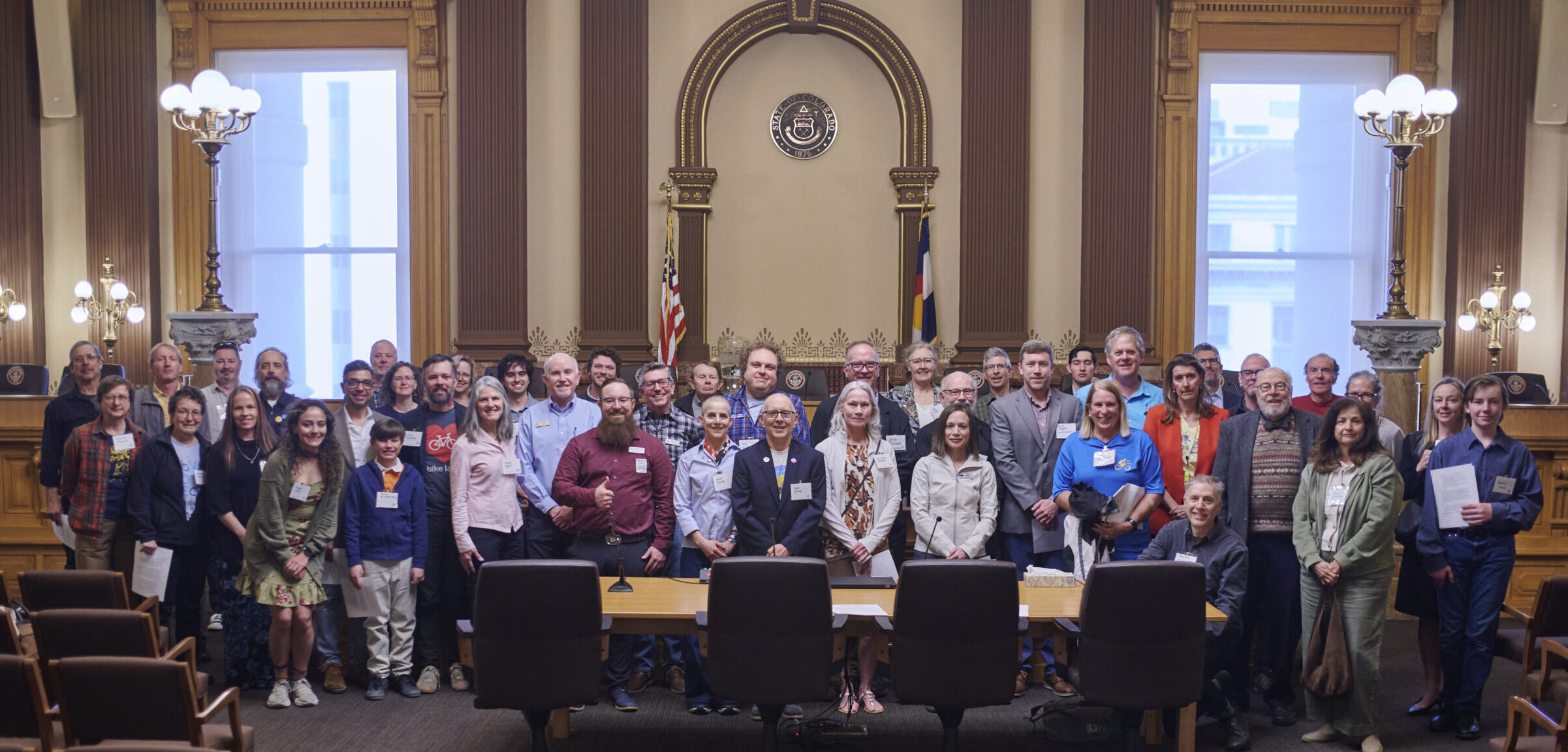
This year’s progress was made possible by numerous individuals, nonprofits, and government agencies who came together to drive change. Hundreds of supporters wrote emails and called legislators, attended Bicycle Colorado’s Lobby Day, and testified before legislative committees. We are especially grateful to the grieving families who have lost loved ones to traffic violence and who have found the strength to advocate for change. Your voices were powerful and made a difference.
Every legislative session, we work closely with other groups who care about safe streets – groups that serve seniors, people with disabilities, and youth, climate advocates, and, of course, safe streets advocates. These relationships are invaluable. This session, we worked most closely with the AAA Colorado, MADD Colorado, and The White Line. Together, we accomplished more than we could working alone.
Finally, we are thankful for our long-standing partnerships with Colorado’s state agencies and government organizations. In this session, the Colorado Department of Transportation, Colorado State Patrol, and Colorado District Attorneys’ Council all played key roles in helping pass laws to expand access to safe biking and walking.
Although the 2026 legislative session has concluded, our work is already underway for 2027. We’re busy researching and developing new legislative concepts, meeting with community partners, and engaging with lawmakers to identify future bill sponsors.
To all our supporters, thank you for standing with Bicycle Colorado. You make our work possible.
Sincerely,
Peter Piccolo
Bicycle Colorado Executive Director
pete@bicyclecolorado.org
Russ Shaw
President, Board of Directors
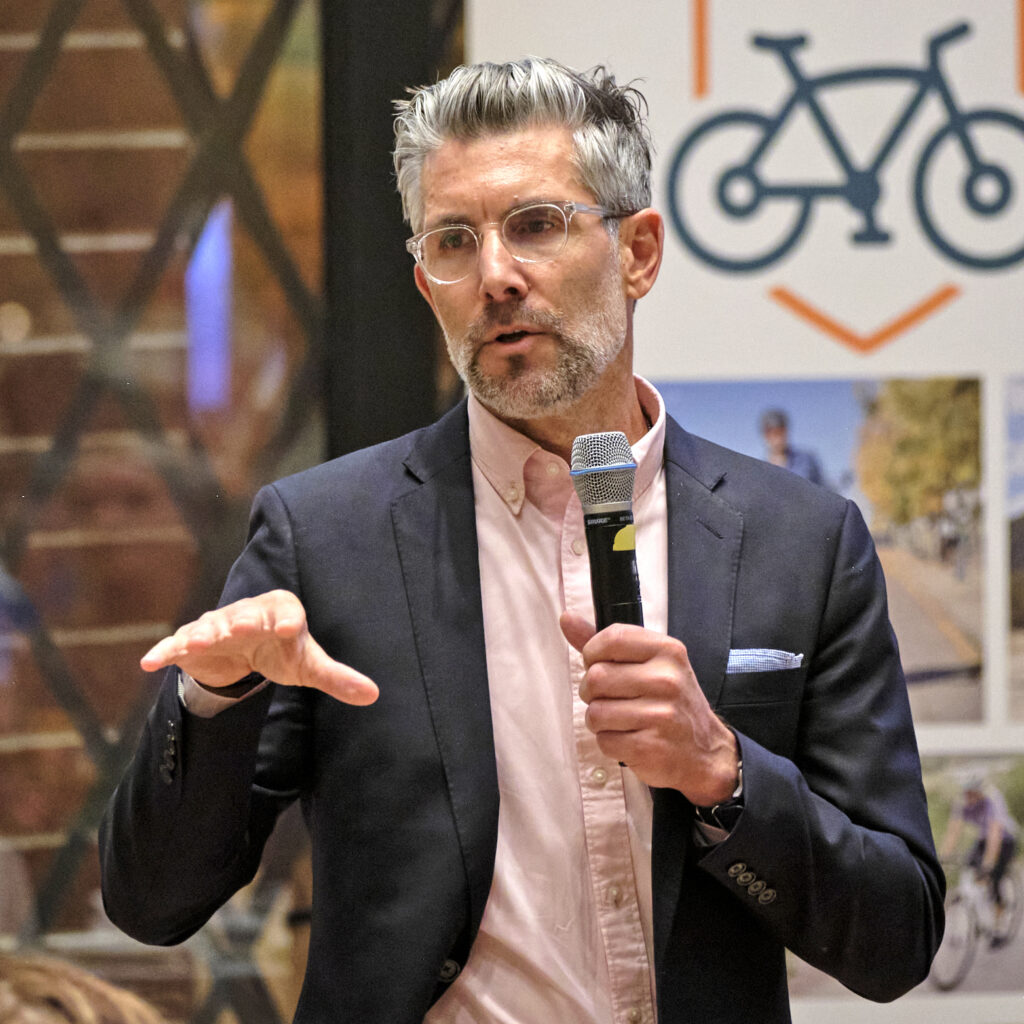
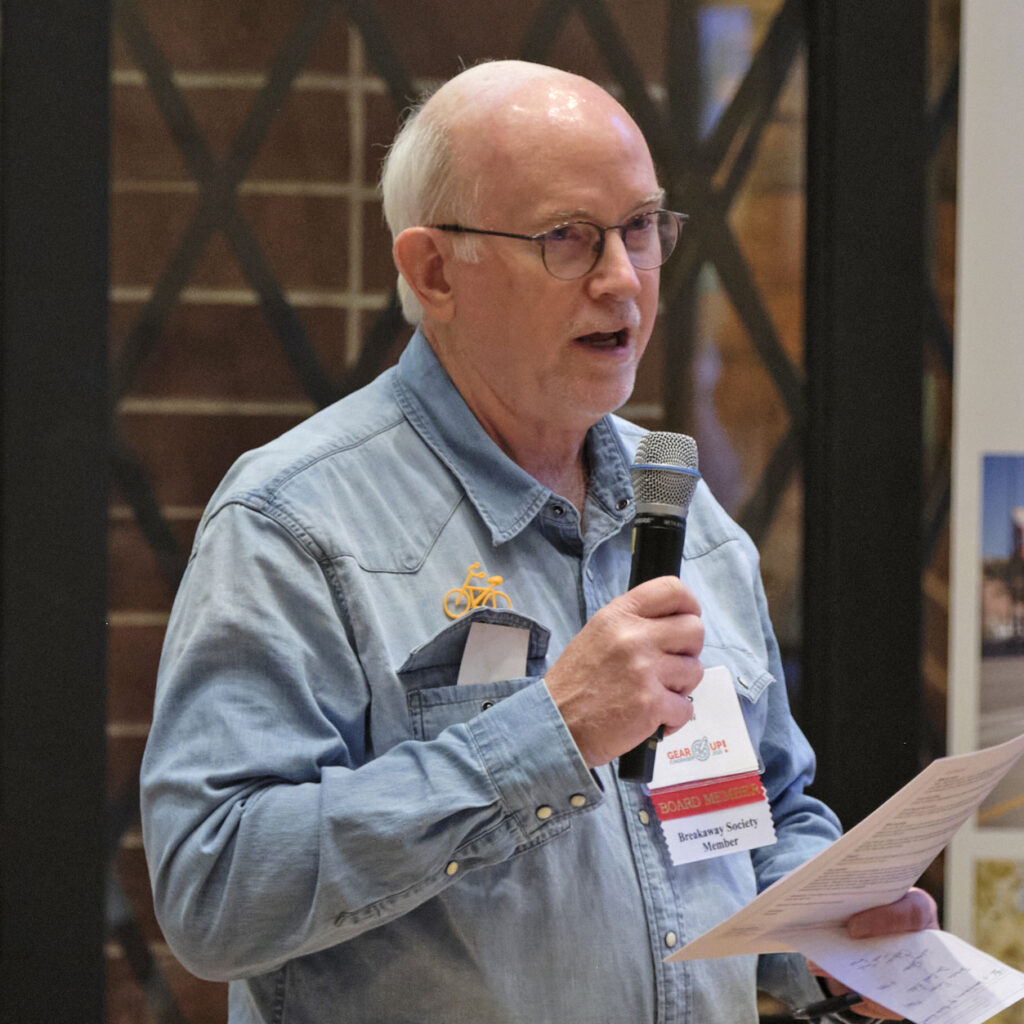
Every session can feel like a battle for legislators’ attention—there are numerous potential bills on a wide range of issues they can focus on; however, by law, each legislator can sponsor only five bills in a session. We are grateful to all the legislators who sponsored bike- and pedestrian-friendly legislation in 2026.
Our Legislator Scorecard will help you understand how legislators voted on Bicycle Colorado-supported bills. If your legislators vote YES on one of these bills, send them a short thank-you note. If they fell short, let them know you expect more in the future. Democracy works best when elected leaders hear directly from the people they represent.
Multiple legislators in both the House and Senate voted YES on all nine bills supported by Bicycle Colorado! Here are a few things that stand out for us:
>> Senator Dylan Roberts sponsored four of nine bills supported by Bicycle Colorado, and Senator John Carson sponsored three.
>> Representative Meg Froelich expanded her portfolio of traffic safety laws by being the lead sponsor on HB26-1318 the Liam Stewart School Zone Act. Since joining the General Assembly in 2019, Representative Froelich has sponsored seven Bicycle Colorado-supported bills, including one of our favorites—a bill that made it illegal to hold a phone when driving.
>> Representative Andrew Boesenecker has been a stalwart supporter of safe streets legislation and has sponsored seven Bicycle Colorado-supported bills, including bills that aim to enhance or protect funding for safe streets infrastructure.
Senate Bill-072 – Increased Penalties for Vehicular Homicide
Senator John Carson Douglas
Senator Marc Snyder El Paso, Teller
Representative Cecilia Espinoza Denver
Representative Bob Marshall Douglas
Status: Signed
House Vote: 61-4-0
Senate Vote: 31-0-4
This bill provides District Attorneys with an additional felony charging option, so that more drivers in traffic fatality cases are charged with a felony rather than a misdemeanor.
Over the years, we have witnessed far too many cases where fatal traffic crashes are charged as a class one traffic misdemeanor, when a felony charge is appropriate. For example, a person texting and driving who hits and kills another person – say, a child in a crosswalk – should be charged with a felony, not a misdemeanor. A misdemeanor charge fails to hold drivers accountable and fails to deliver justice to families who have lost loved ones.
One reason more cases are not charged as felonies is that District Attorneys lack charging options. Colorado law includes a class four vehicular homicide, but this requires proving a driver was reckless or impaired, a standard materially higher than careless driving. Colorado law lacked a clear class six or five felony for fatal traffic crashes.
Senate Bill 072 clarifies that criminally negligent homicide, a class five felony, includes vehicular crimes. In a nutshell, this bill establishes a new crime that sits between careless driving, a class one misdemeanor, and reckless or impaired driving, a class four felony. Additionally, this bill removes language from the statute that made using a mobile electronic device while driving and hitting and killing another person a class one misdemeanor.
Building on the work last year with the passage of Senate Bill 25-281 – Increase Penalties for Careless Driving, Bicycle Colorado was proud to advocate for Senate Bill 072 and work closely with families impacted by traffic violence, AAA Colorado, MADD, and The White Line.
HB26-1237 – Transportation Safety Modifications
Representative Lesley Smith Boulder, Clear Creek, Gilpin, Larimer
Representative Rick Taggart Mesa
Senator William Lindstedt Adams, Broomfield, Weld
Status: Signed
House Vote: 63-0-2
Senate Vote: 32-0-3
>> Makes it illegal, statewide, to block a bike lane.
>> Replaces “accident” with “crash” in Colorado statute.
Increasing the miles of bike lanes and keeping them clear of impediments have been priorities of Bicycle Colorado for decades. More recently, our 2018 campaign, Things in the Bike Lane, highlighted how often bike lanes were obstructed. In 2020, we helped pass Senate Bill 061 – Yield to Bicycles in Bike Lanes, which created a new traffic offense for failing to yield to bicyclists in a bike lane.
Bike lanes are essential travel lanes and should be treated similarly to vehicular travel lanes: Just as it’s against the law to impede a vehicular travel lane, the same should be true for bike lanes. Additionally, blocked bike lanes are especially hazardous to bicyclists as they often require a sudden maneuver into traffic.
Although a few Colorado communities have adopted local ordinances prohibiting the obstruction of bike lanes, it has not been state law until now. The number of complaints flowing into our office about obstructed bike lanes – not just by parked vehicles, but everything from dumpsters, to mobile storage units, to port-a-potties – and the challenge we faced responding because these impediments were not illegal, prompted us to take action.
Additionally, this bill replaces the term “accident” with “crash” in the Colorado statute. In a nutshell, the words we use matter. Accident connotes that traffic crashes are unpredictable and unpreventable, when, in almost every case, the opposite is true – they are the result of choices and are thus predictable and preventable: choices people make when driving, choices traffic engineers make when designing roads, and choices leaders and citizens make when they tolerate traffic violence. Read the testimony by our friends at AAA to learn more about why this change is important.
Bicycle Colorado was proud to work with AAA, MADD, and The White Line on this bill.
HB26-1318 – Liam Stewart School Zone Act
Status: Signed
House Vote: 46-19-0
Senate Vote: 33-1-1
Representative Meg Froelich Arapahoe, Denver
Representative Kenny Nguyen Adams, Broomfield, Weld
Senator Lisa Cutter Jefferson
>> Creates a uniform definition for school zones at 1,000 feet with a minimum of 200 feet.
>> Requires that municipalities hold a public hearing before reducing a school zone.
>> Empowers local governments to designate Safe Routes to Schools, streamlining the process for using speed and red-light cameras.
>> Creates a framework for School Streets, student-friendly spaces that have a maximum speed limit of 10 mph and possibly other safety interventions.
School zones and the routes students travel to get to them are sacred spaces where the safety of youth is the top priority. Overall, Colorado has done a good job teaching kids how to bike and walk to school; however, we have fallen short of providing students with safe spaces for biking and walking. This bill helps close that gap.
This bill was made possible due to the fearless advocacy of Josh Stewart, father of Liam Stewart, who was hit and killed on October 17, 2023, at the age of 13 while riding his bike to school. We’re also grateful to a group of Denver parents and advocates who proposed and advocated for the School Streets component of the bill.
SB26-152 – Changes Automated Vehicle Identification System Usage
Status: Signed
House Vote: 51-14-0
Senate Vote: 32-3-0
Senator Matt Ball Denver
Senator Byron Pelton Morgan, Logan, Phillips, Weld, Yuma, Sedgwick, Washington
Representative Jenny Willford Adams
Representative Carlos Barron Adams, Weld
This bill refines the legal framework to support best-in-class implementation of automated enforcement. The bills include numerous provisions; here are a few key components:
>> Strengthens public notification requirements before automated enforcement is deployed. Current law requires municipalities to announce on their websites and social media accounts the use of automated enforcement 30 days before implementation. This bill further requires municipalities to install signs in corridors where automated enforcement will be used 30 days before implementation.
>> Strengthens guardrails on vendor contracts. Current law prohibits municipalities from entering into contracts with vendors that include payments based on ticket volume. This bill clarifies these restrictions.
>> Adds an escalation factor to penalties. Current law dictates a $40 penalty for speeding and an $80 penalty for disobeying a red light (fines are higher in school and construction zones and for excessive speeding). This bill increases the penalty for speeding to $50 and for disobeying a red light to $95, beginning in 2035.
Automated enforcement works, which is why Bicycle Colorado has helped pass four state laws in the past four years and successfully defeated a 2018 bill that would have prohibited the use of all automated enforcement in Colorado.
In the 1980s, Arizona was the first to deploy speed cameras. In the 1990s, New York was the first to deploy red light cameras. Over five decades, the efficacy of this technology has been thoroughly studied, and the conclusion is clear: automated enforcement reduces dangerous driving, crashes, serious injuries, and fatalities. For example, a review of 35 studies found that in areas with speed cameras, vehicle speeds were reduced by 65% and fatal crashes by up to 44%. Closer to home, on Highway 119 in Boulder, where the speed limit is 50 mph, automated speed cameras were installed in July 2025, resulting in an 80% drop in speeding.
Amplifying the need for this proven safety tool is the fact that many Colorado law enforcement agencies have reduced resources for officer-initiated traffic enforcement. A study by the Common Sense Institute concluded that from 2018 to 2024, traffic violations in Colorado declined by 54%, from 159,000 to 72,800 (traffic violations are a reliable proxy for resources invested in traffic enforcement). Automated enforcement is more effective and more affordable than officer-initiated enforcement, allowing law enforcement agencies to shift resources to address other crimes.
With Bicycle Colorado’s amendments, this bill strengthens protections for residents while maintaining the overall quality of Colorado’s automated enforcement statute.
This session, Coloradans faced a $1.2 billion structural budget deficit, driven largely by rising Medicaid costs and a 40% reduction in corporate tax revenue due to changes in federal tax policy. This meant that legislators invested significant time figuring out how to close the gap. With limited options for generating new funding, the main question is which programs should be cut. Transportation funding was at the top of the list of initiatives to take a hit.
The design of our transportation infrastructure has a significant impact on safety – it’s either designed to prioritize safety, or it is not. Research consistently shows that things such as protected bike lanes, crosswalks, and other traffic-calming measures reduce fatalities and serious injuries. The safest communities are not those with perfect drivers, but those that design the public right-of-way to protect people.
An increasing number of Colorado communities want to create a built environment that prioritizes safety, yet they lack funding. In 2021, Bicycle Colorado successfully advocated for the passage of Senate Bill 21-260 – Sustainability of the Transportation System, which created the Multimodal Options Fund (MMOF). Through the MMOF, $387 million has been distributed to approximately 150 communities. Two bills in 2026 threatened this funding:
>> Bicycle Colorado opposed House Bill 26-1266 – Repeal Retail Delivery Fee. The MMOF is partially funded through a retail delivery fee (currently at $0.29 per delivery). Bicycle Colorado, in partnership with the Colorado Department of Transportation and conservation and climate advocacy groups, successfully defeated this bill in committee.
>> Bicycle Colorado, once again with the Colorado Department of Transportation and conservation and climate advocacy groups, proposed amendments to House Bill 26-1399 – Eliminate General Fund Transfer to Multimodal Transportation Fund. A second vital source of funds for the MMOF is an annual $10.5 million transfer from the state’s General Fund. This bill would have permanently eliminated this funding transfer. The amended bill, which passed, reduces the transfer cut to the next fiscal year only.
Finally, Bicycle Colorado supported House Bill 26-1430 – Transportation Funding Adjustments. This bill will neutralize the negative funding impact of Ballot Initiative 175, which, if passed, would dramatically reduce funding for education, healthcare, and transportation. Read this post to learn more about our position on Initiative 175.
Status: Signed
House: 62-1-2
Senate: 33-0-2
Senator Dylan Roberts Clear Creek, Eagle, Garfield, Gilpin, Grand, Jackson, Moffat, Rio Blanco, Routt, Summit
Senator John Carson Douglas
Representative Junie Joseph Boulder
Representative Matt Soper Delta, Mesa
Requires officers to offer a voluntary preliminary breath screening test at every fatal or serious injury crash.
When Magnus White was killed riding his bike on July 29, 2023, he was tested for drugs and alcohol, as required by state law. Inexplicably, the driver who killed him was not. This bill is an important step towards addressing this flaw. Thank you to Magnus’ parents and The White Line for leading on this issue.
Status: Signed
House Vote: 56-8-1
Senate Vote: 33-2
Representative Amy Paschal El Paso, Teller
Representative Jamie Jackson Arapahoe
Senator Dylan Roberts Clear Creek, Eagle, Garfield, Gilpin, Grand, Jackson, Moffat, Rio Blanco, Routt, Summit
Senator John Carson Douglas
Enables more effective use of interlock devices by closing loopholes and providing financial assistance.
Roughly one out of three traffic fatalities in Colorado involves an impaired driver. Fatalities involving impaired drivers increased from 174 deaths in 2019 to 241 deaths in 2025, a 39% increase. The Centers for Disease Control and Prevention reports that ignition interlocks reduce repeat impaired-driving offenses by about 70% while the device is installed.
Thank you, MADD, for leading on this bill.
Status: Signed
House: 35-30
Senate: 32-3
Senator Dylan Roberts Clear Creek, Eagle, Garfield, Gilpin, Grand, Jackson, Moffat, Rio Blanco, Routt, Summit
Representative Chad Clifford Arapahoe
Increases penalties for repeat and excessive speeders and for improperly passing vehicles in no-passing zones.
Speeding kills. A bicyclist or pedestrian hit by a vehicle traveling 40 mph has a 73% likelihood of being seriously injured or killed. When the vehicle’s speed is 20 mph, the likelihood of being seriously injured or killed drops to 13%. This bill helps hold people who speed accountable.
Status: Signed
House: 42-21-2
Senate: 33-2
Representative Junie Joseph Boulder
Representative Manny Rutinel Adams
Senator Dylan Roberts Clear Creek, Eagle, Garfield, Gilpin, Grand, Jackson, Moffat, Rio Blanco, Routt, Summit
Improves how Colorado collects and reports toxicology results from crashes.
Better data leads to better advocacy. In other words, you can’t solve what you don’t understand. The bill may seem administrative on the surface, but it improves the quality of the data Colorado collects about fatal crashes by requiring coroners to provide available toxicology results for people killed in motor vehicle crashes. This gives policymakers, researchers, law enforcement, and advocates a more complete picture of the factors contributing to traffic deaths.
Status: Signed
House: 44-21-0
Senate: 22-13
Representative Julie McCluskie Chaffee, Grand, Jackson, Lake, Park, Summit
Representative Steven Woodrow Denver
Senator Dylan Roberts Clear Creek, Eagle, Garfield, Gilpin, Grand, Jackson, Moffat, Rio Blanco, Routt, Summit
Senator Tony Exum El Paso
This bill lowers housing costs by focusing growth around transit.
The safest and most bikeable communities are often those where housing, destinations, and public transportation options are located close together.
Status: Failed
House Vote: 32-31-2 (33 votes needed to pass)
>> This bill created a path for bars to stay open until 4:00 a.m. or longer, potentially putting more impaired drivers on the streets with people commuting to work, including bicyclists and pedestrians.
Status: Failed in committee
>> This bill would have reduced funding for bicyclists and pedestrian infrastructure.
Status: Failed in committee
>> People walking and biking are especially vulnerable in crashes involving large, heavy vehicles. HB26-1097 would have allowed certain military vehicles—potentially weighing up to 20,000 pounds—to operate on public roads.
Illegal electric devices, such as e-motos, are drawing significant attention, including from state legislators. In 2025, we helped pass HB25-1197, a consumer protection law that prohibits the marketing and sale of devices as e-bikes when, in fact, they are not legal e-bikes.
This year, a bill related to e-bikes was introduced: HB26- 1125 – Penalties on Parents for Minors Using Electric Bicycles. In short, this bill landed on our desk late, and it needed work; therefore, the bill sponsor shelved it in committee.
We anticipate proposing legislation in 2027 to address growing concerns about e-bike safety. One goal in crafting e-bike legislation is to avoid a New Jersey-type law that dramatically restricts the use of legal e-bikes, undermining the many benefits they provide.
Our goal is to reduce traffic fatalities to zero. We know this goal is achievable because the solutions to traffic violence have been thoroughly researched and documented. We know what works, and we have seen remarkable success in other parts of this country and around the world that Colorado can replicate. When we achieve this goal, any person—from young to old, novice rider to pro, whether living in an urban, suburban, or rural area—will be able to ride their bike without fearing for their safety.
That is why, since 1992, Bicycle Colorado has advocated on behalf of bicyclists and pedestrians in the state legislature, fighting to pass laws such as the Three Feet to Pass, Safety Stop, and Distracted Driving laws, and a law that established our nation-leading Safe Routes to Schools program, to name just a few. Since 2018, Colorado has enacted 37 bicyclist and pedestrian-friendly laws. Explore our public policy work to see more of our impact across Colorado.
Legislators gather from January to May every year to debate and vote on bills. However, passing new laws takes a consistent, year-round effort. In fact, arguably, the bulk of the work happens in the interim—from now through the end of the calendar year. It is during this time of year that Bicycle Colorado:
Of course, during the legislative session, we’re at the Capitol daily fighting to secure votes for laws to expand access to safe biking and walking.
We can’t do this work alone. Your support makes our work possible.
Subscribe to eNews & Action Alerts
Follow us on social: