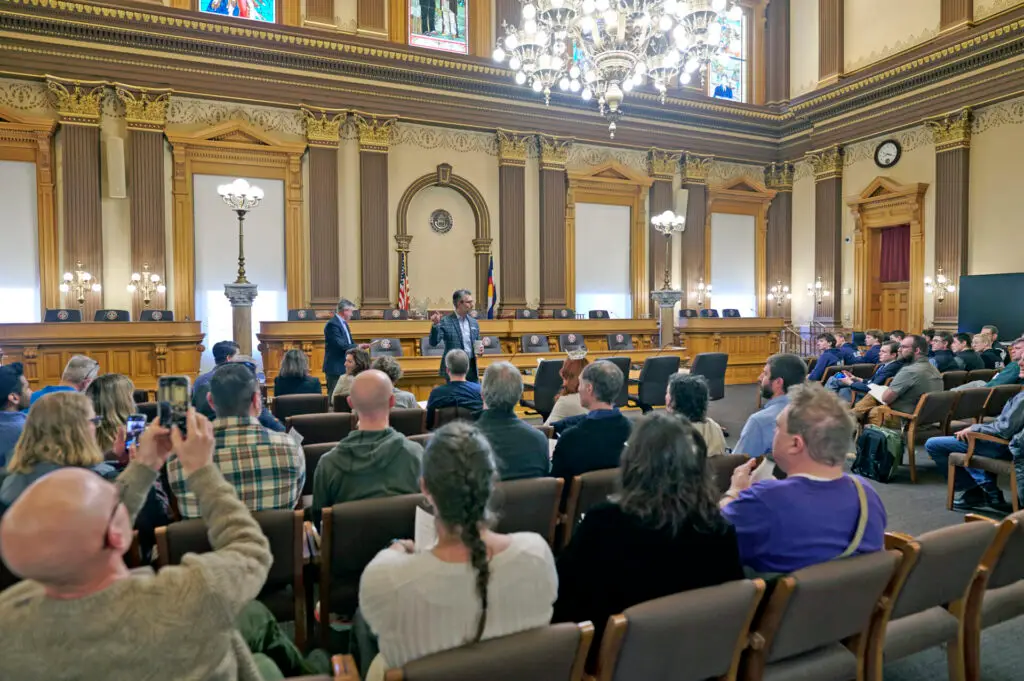
From January to May, our elected officials gather in Denver to pass laws that affect all Coloradans. Bicycle Colorado is honored to be at the Capitol almost daily during these months, advocating for laws that expand access to safe biking, walking, and rolling for people of all ages and abilities.
The 2025 legislative session delivered key wins for bicyclists, pedestrians, and safe streets advocates. This, our 2025 Legislative Scorecard, summarizes our priority legislation and how each legislator voted. We encourage you to review how your elected officials voted and thank them for their support, or ask them to step up and do more in the future.
When reviewing the scorecard, you’ll notice that we work with legislators on both sides of the aisle. We will always partner with any legislator who wants to expand access to safe biking, walking, and rolling.
We are often asked how we decide which bills receive our attention. Our Policy Principles, which were crafted with input from our members and partners and adopted by our Board of Directors, guide our decision-making. The 2025 bills summarized below are organized by these principles.
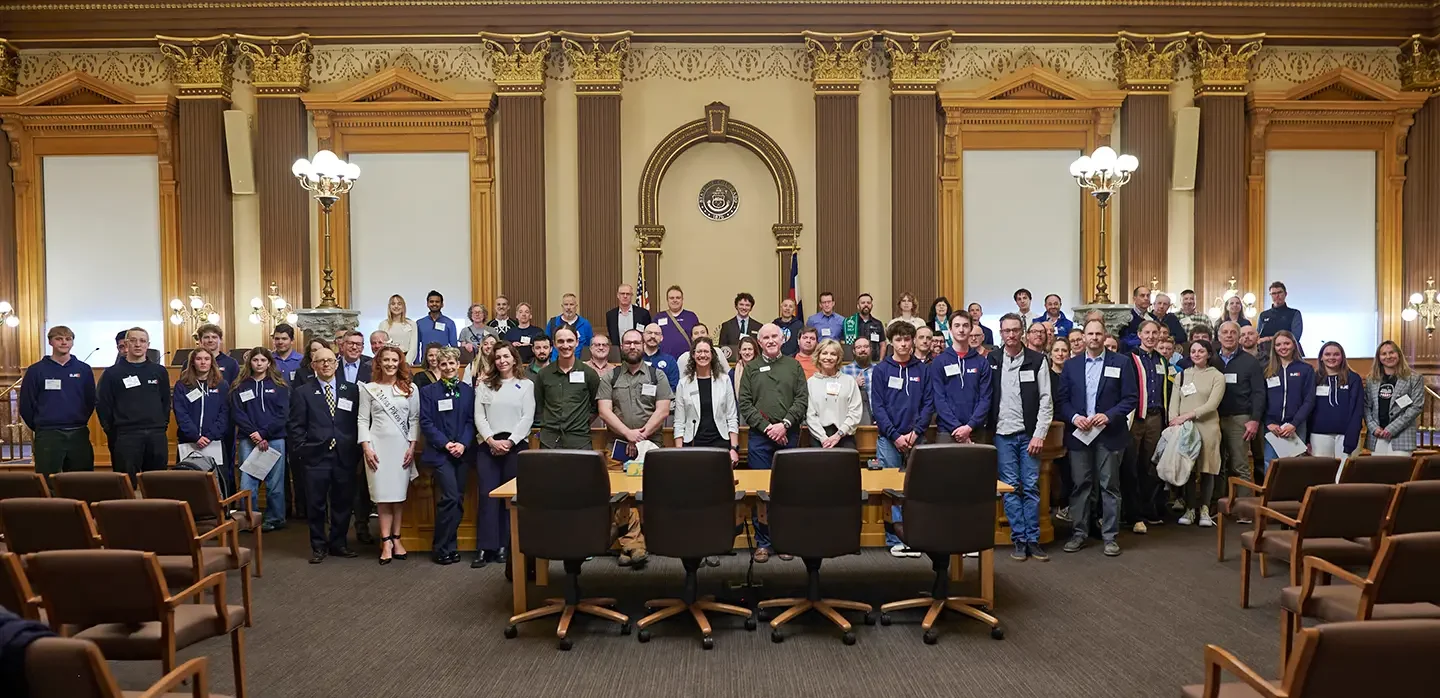
Finally, we can’t overstate the important role our members and partners play in driving policy change. Hundreds of people wrote and called legislators, attended our lobby day, and many of you testified in support of legislation. Thank you for advocating with us!
Work has already begun in preparation for the 2026 legislative session, where we will continue to advocate for laws that expand access to convenient and safe biking, walking, and rolling. Please don’t hesitate to share your ideas for possible legislation.
With gratitude,
The Bicycle Colorado Team
HB25-1044 Local Funding for Vulnerable Road User Protection
Result: Postponed indefinitely
Sponsors: Andrew Boesenecker, Faith Winter, Lisa Cutter
The bill would have empowered local municipalities to create a new sustainable funding source to build pedestrian and bicyclist infrastructure.
HB25-1303 Funding for Motor Vehicle Collision Prevention
Result: Postponed indefinitely
Sponsors: Andrew Boesenecker, Faith Winter, Megan Lukens, Dylan Roberts
The bill would have created a new fee of approximately $3.50 annually added to vehicle insurance policies. This fee was projected to generate approximately $18 million annually, with 70% invested in bicyclist and pedestrian infrastructure and 30% in wildlife crossings.
SB25-030 Increase Transportation Mode Choice Reduce Emissions
Result: Signed into law
Sponsors: Faith Winter, Nick Hinrichsen, Meg Froelich, William Lindstedt
Requires the Colorado Department of Transportation and Metropolitan Planning Organizations to create an active and public transportation project inventory that identifies gaps in transit, bicyclist, and pedestrian infrastructure.
Budget Action Impacting Infrastructure Funding
In 2025, the Joint Budget Committee (JBC) was tasked with closing a $1.2 billion state budget gap resulting from Medicare and education costs exceeding state revenue. Two important funding sources for bicyclist, pedestrian, and public transportation were impacted
- Multimodal Options Fund: A one-time cut of $71.4M
- Revitalize Main Street Program: A one-time $7M cut
Bicycle Colorado advocated to secure these funding sources in 2021 and will fight to reestablish them in 2026.
SB25-281 Increase Penalties for Careless Driving
Result: Signed into law
Sponsors: John Carson, Marc Snyder, Cecilia Espinoza, Ryan Armagost
The original version of the bill aimed to increase careless driving resulting in death from a misdemeanor to a felony and require mandatory chemical testing of drivers when crashes result in the death of vulnerable road users.
The bill signed into law was amended and did not achieve our objective, but accomplished two important things:
- Prior to the passage of this bill, a driver who hits and kills more than one person and is found guilty of careless driving resulting in death could only be sentenced for one fatality. This bill allows guilty drivers to be charged for each loss of life.
- The bill expands Victims’ Rights Assistance to include people who experience serious bodily injury.
In 2026, we will continue to advocate to increase careless driving resulting in death from a misdemeanor to a felony.
HB25-1230 Changes Violation Driver Overtaking School Bus
Result: Signed into law
Sponsors: Jarvis Caldwell, Amy Pascha, Faith Winter
Empowers municipalities and local school districts to use cameras to enforce laws preventing drivers from illegally passing school buses.
HB25-1197 Sale of Electrical Assisted Bicycle Requirements
Result: Signed into law
Sponsors: Lesley Smith, Rick Taggart, Judy Amabile, Matt Ball
Promotes safe e-bike adoption by modifying the current statute to clarify what can and cannot be sold and advertised as an e-bike and requiring that batteries meet independent testing requirements.
Budget Action Impacting Access to E-Bikes
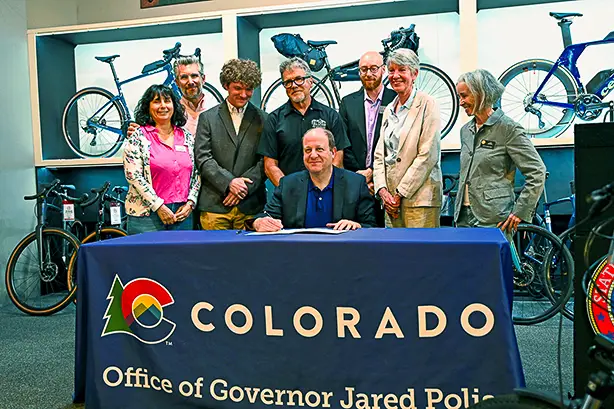
In 2023, Bicycle Colorado successfully advocated for House Bill 1272, which created a $450 tax credit to every Coloradan who purchases an e-bike from a participating retailer. Due to state financial constraints, starting in 2026, the tax credit will be reduced to $225. Other decarbonization tax credits, such as those for electric vehicles and heat pumps, will also be reduced.
SB25-161 Transit Reform
Result: Signed into law
Sponsors: Faith Winter, Iman Jodeh, William Lindstedt, Meg Froelich
This is a sweeping bill that aims to improve RTD’s efficiency and effectiveness. A few of the key provisions in the bill include:
- RTD may now partner with local governments, higher education institutions, housing entities, or businesses to expand transit services within or beyond its service territory
- RTD is required to align with: Statewide greenhouse gas reduction targets and modal choice goals (e.g., per SB 25‑030) and establish worker retention goals.
- RTD must create a 10-year strategic plan by April 2026 and conduct a comprehensive operational analysis every five years thereafter, and submit quarterly reports to its Board regarding plan progress.
- RTD must publish dashboards on its website covering: capital projects, ridership trends, service changes, workforce data, and safety figures.